
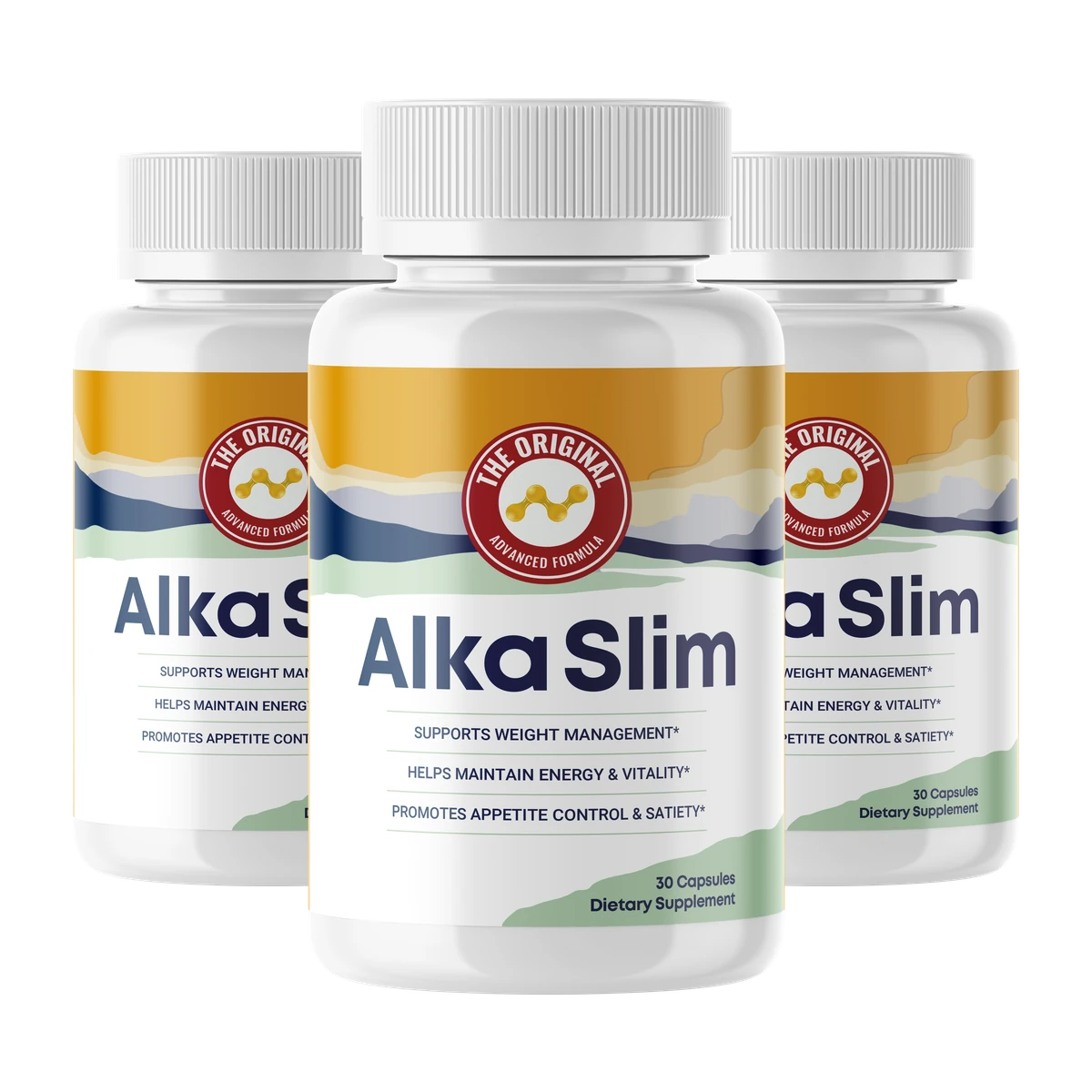
What it actually is
AlkaSlim is marketed as a once-daily capsule meant to "balance your body's pH" and support weight management, sold in 1-, 3-, and 6-bottle packages. The vendor's own pricing, listed directly in its site's structured data, is $69 for a single 30-day bottle, $177 for three bottles ($59 each), and $294 for six bottles ($49 each), backed by a stated 60-day money-back guarantee. The headline ingredients called out on the sales page are Baobab Fiber, L-Arabinose, Spermidine, and Konjac Glucomannan, with no per-ingredient doses published anywhere on the page. Like most pages in this category, it states only that the product is "manufactured in the United States in an FDA-registered facility" that follows Good Manufacturing Practices — standard boilerplate that doesn't identify who actually makes it.
Things worth knowing before you decide
We found AlkaSlim sold under its own name on at least six separate domains styled as "the" official site — alkaslim.net, usa-alkaslim.com, getalkaslim.com, alkaslim-alkaslim.com, alkeaslim.com, and alkaslim.store — the same manufactured-scarcity mirror-site pattern we've documented on other products on this desk. The alkaslim.store version sat behind an automated bot-verification screen that blocked a plain page load during our research. None of the versions we could load directly name a company, a founder, or a physical address; the site's own contact page lists only a phone number and an email address obscured by an anti-scraper script.
Independent reviews describe additional ingredients beyond the four the vendor highlights — one lists apple cider vinegar, apple pectin, and beet root powder alongside the core four; another lists an unrelated vitamin-heavy formula (Thiamin, Vitamins D, B12, K, and A). No source we checked, including the vendor's own page, discloses a milligram amount for any ingredient.
The clearest sign this page reuses a shared template across different products is visible on the live site itself: a scrolling "customer reviews" strip on alkaslim.net currently displays quotes describing an entirely different item — a memory-and-focus powder called "Neo Vital" that customers say they "mix with water" each morning — mixed in among quotes that actually reference AlkaSlim. AlkaSlim is sold only as a capsule; nothing about it involves mixing a powder with water. The page's own source code confirms this isn't a one-off: developer comments left in the file describe replacing an earlier version of the page's structured data that had been built for an unrelated blood-sugar product (carrying a 4.9-star, 2,000-review rating the comment itself calls unsupported), and disabling a script that had previously hijacked the browser's back button to redirect visitors to a different, now-defunct product page after they tried to leave. Checkout links on the page route through BuyGoods, a third-party affiliate checkout network, the same one already documented in our reporting on MemoHoney elsewhere on this desk.
Separately, fact-checker Jordan Liles (July 28, 2026) names AlkaSlim among the products sold through a documented AI deepfake video campaign built around a fabricated "$1 baking soda recipe" the ads attribute to Oprah Winfrey, endorsed on-camera by an AI-generated likeness of Dr. Ania Jastreboff, a real Yale School of Medicine physician and obesity-medicine researcher. Yale's own faculty page confirms videos showing Dr. Jastreboff endorsing weight-loss products are fraudulent and AI-generated — she has not endorsed AlkaSlim, a baking-soda recipe, or any product in this family. The fabricated video reportedly also claims the recipe triggers the same appetite-regulating hormones that injectable prescription weight-loss medications target, a claim the fact-check found no support for. We weren't able to personally trace one of these video ads through to an AlkaSlim checkout page ourselves, so we're citing this as reported by an independent fact-checker rather than something we confirmed first-hand — but it's one more reason we're not sending readers toward a purchase.
Trustpilot's page for alkaslim.store (2.5 out of 5 from 16 reviews, checked directly) includes several billing complaints with names attached: a reviewer named Dana Johnston describes being charged $738 for 18 bottles and being told they'd have to pay return shipping to get a refund; a reviewer named Nancy says she was charged "over $1,000.00... for 1 order that I told them I didn't want"; a reviewer named Stephen Zavitz says he was quoted $294 for six bottles but actually charged $320; and a reviewer named Cecilia Thomas says her card was later declined by other merchants because "the company has been flagged many times for fraud." Not every review is negative — one reviewer reported a genuinely good experience after two months of use, and another said four months brought no noticeable result. One reviewer also described a family member's health complication she attributed to the product; we can't verify a causal link from a single review, but if you have kidney disease or another condition affecting fluid or electrolyte balance, that's a real reason to check with a doctor before trying any pH-focused supplement, not just this one.
A verified alternative, addressing the same gap
The one AlkaSlim ingredient with real regulatory and research history behind it is konjac glucomannan. The European Food Safety Authority has authorized a specific claim that glucomannan contributes to weight loss when taken as 3 doses of 1 gram with water before meals, as part of a reduced-calorie diet — it works by forming a gel in the stomach that increases fullness. That said, the evidence isn't uniformly positive: a 2020 systematic review and meta-analysis of randomized controlled trials found the average weight-loss difference versus placebo was small and not statistically significant. That's a genuinely mixed picture, not a slam dunk — a real basis for "may support fullness before meals" at a disclosed, EFSA-recognized dose, rather than a proprietary blend with no dose disclosed at all.
See it on Amazon →As an Amazon Associate, Mind Vitality News earns from qualifying purchases. This link opens a live Amazon search for this ingredient, not one specific listing we control — check the label for a disclosed per-capsule dose, and take with plenty of water as directed, since glucomannan can pose a choking/blockage risk if swallowed dry or without enough liquid. Prices and sellers may vary.
FAQ
- Is AlkaSlim a scam?
- We can't prove intent, but a product sold under one name across at least six near-identical sites, with no company name disclosed anywhere, a live testimonial section that describes a different product, and a named connection to a documented deepfake celebrity-endorsement campaign, is a pattern we tell readers to avoid regardless of what any individual bottle actually contains.
- Did Oprah or a real doctor actually endorse a baking soda recipe?
- No. Yale School of Medicine's own faculty page states that videos showing Dr. Ania Jastreboff endorsing weight-loss products, including this recipe, are fraudulent and AI-generated. We found no evidence Oprah Winfrey has endorsed it either.
- What ingredients does AlkaSlim actually contain?
- The vendor's own page highlights Baobab Fiber, L-Arabinose, Spermidine, and Konjac Glucomannan, with no doses disclosed. Other independent reviews describe additional or entirely different ingredients, and we couldn't find a single consistent formula across sources.
- What should I take instead?
- We're pointing readers to konjac glucomannan at a disclosed, EFSA-recognized dose — see the alternative box above, and the honest caveat about mixed trial evidence.
Sources
- Direct review of alkaslim.net, usa-alkaslim.com, getalkaslim.com, alkaslim-alkaslim.com, and alkeaslim.com (ingredient list, pricing, guarantee terms, page source code, absence of company name); alkaslim.store (bot-verification wall).
- totalhealthrd.com AlkaSlim review (additional ingredient list, no disclosed doses).
- Trustpilot reviews of alkaslim.store (named billing and fraud-flag complaints, mixed effectiveness reports).
- Jordan Liles (jordanliles.com), July 28, 2026, fact-check naming AlkaSlim among products tied to the fabricated Oprah Winfrey / Dr. Ania Jastreboff "baking soda" video campaign.
- Yale School of Medicine faculty profile for Ania Jastreboff, MD, PhD, confirming videos of her endorsing weight-loss products are fraudulent and AI-generated.
- EFSA Journal 2010;8(10):1798, opinion on glucomannan and body-weight reduction; 2020 systematic review and meta-analysis of randomized controlled trials on glucomannan supplementation and weight loss (Obesity Medicine).